Bitcoin miners' move into AI is creating a new market for trading computing power
- Luxor Technology raised $16 million to expand its artificial intelligence hardware brokerage and computing-power trading business as bitcoin mining companies increasingly move into AI.
- Publicly traded bitcoin miners had signed more than $70 billion in AI and high-performance computing contracts by the end of March, according to CoinShares.
- Luxor found that most mining sites it assessed had adequate electricity and fiber connections for AI workloads but would need new data centers.
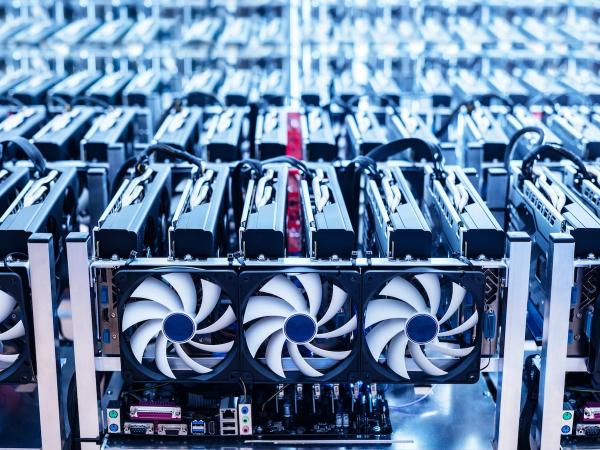
Bitcoin mining companies are increasingly turning to artificial intelligence (AI), renting out computing power and converting mining facilities into data centers. Now, some of the companies that built their businesses serving bitcoin miners are following them into the AI market.
Luxor Technology, best known for its bitcoin mining services, is also moving into AI hardware and trading contracts that allow companies to agree on computing prices in advance.
The Seattle-based company said on Tuesday that it raised $16 million in a round led by CMT Digital. Bitcoin mining equipment makers Canaan and MicroBT also invested. Luxor said the money will go toward its AI hardware brokerage and computing-power trading business.
The round included new investment and sales of existing shares, although Luxor did not disclose how much of the new funding was invested in the company.
Publicly traded bitcoin miners had signed more than $70 billion worth of AI and high-performance computing contracts by the end of March, according to CoinShares data.
Not everyone is moving away from bitcoin mining. Nasdaq-listed NIP Group (NIPG) announced plans last week to essentially increase its mining capacity by about 48%. The company said it expects to generate about 195 bitcoin a month at full deployment.
Moving into AI also requires more than access to electricity. Ethan Vera, Luxor's chief operating officer, told CoinDesk that its software business works with bitcoin miners representing nearly two gigawatts of power capacity.
After assessing more than half that capacity, Luxor found that most sites had sufficient electricity and fiber connections for AI workloads but would require new data centers.
Luxor is also expanding into contracts that allow buyers and sellers to agree on future computing prices, much as bitcoin miners use financial contracts to manage changes in mining revenue.
Sam Hallene, a partner at CMT Digital, said AI companies have different reasons to protect themselves against price changes, including the possibility that expensive computing equipment remains useful longer than expected.
"We don’t know exactly what the market structure will look like at the end of the day," Hallene told CoinDesk.
Luxor already offers privately negotiated contracts tied to computing rental prices, although the market is still developing. Vera said transparency remains a problem, particularly around AI hardware prices.
In August, Luxor introduced a price index that tracks daily asking prices for Nvidia AI server systems, providing buyers and sellers with a reference point for equipment prices.

- 1Nasdaq-100 comes onchain as Janus Henderson and Centrifuge launch first licensed fund3 minutes ago
- 2CF Benchmarks brings Wall Street pricing infrastructure onchain, including data used by BlackRock24 minutes ago
- 3Bitcoin shows signs of weakness while Ripple's bank win fails to bolster XRP2 hours ago
- 4Live updates: Bitcoin holds below $80,000 as AI buildout draws investor attention and capital2 hours ago
- 5Japan's top yen stablecoin falls short of its target in a disappointing first year2 hours ago
- 6Bitcoin drops below $80,000 as crypto ignores Asian tech rally, Fed meeting begins2 hours ago
- 7Crypto wallet maker Keystone to destroy almost 19,000 devices after security breach3 hours ago
- 8Investor who called for AI pivot in 2023 says bitcoin is going to $57,0003 hours ago
- 9Now is the time to accumulate bitcoin, Galaxy says4 hours ago
- 10An AI label alone no longer wins lenders, JPMorgan says5 hours ago
Beyond the Risk-Free Rate: Diversified Real World Yield in Productive Stablecoins

Beyond the Risk-Free Rate: Diversified Real World Yield in Productive Stablecoins
Diversified RWA stablecoins sustain 5-7% yield from real credit as crypto funding compresses to ~4%. GENIUS pushes yield off-chain; TAM grows to $4B in 3 years.
Diversified RWA stablecoins sustain 5-7% yield from real credit as crypto funding compresses to ~4%. GENIUS pushes yield off-chain; TAM grows to $4B in 3 years.
Why it matters:
Diversified RWA stablecoins sustain 5-7% yield from real credit as crypto funding compresses to ~4%. GENIUS pushes yield off-chain; TAM grows to $4B in 3 years.

Nasdaq-100 comes onchain as Janus Henderson and Centrifuge launch first licensed fund

Japan's top yen stablecoin falls short of its target in a disappointing first year

Crypto wallet maker Keystone to destroy almost 19,000 devices after security breach
Related stories
Bitcoin Mining Firm Luxor Raises $16 Million to Scale Its AI Compute Push

Luxor raises $16M from CMT Digital amid AI-Bitcoin miner convergence

Bitcoin price analysis sees ‘strong rally’ as old coins become dormant